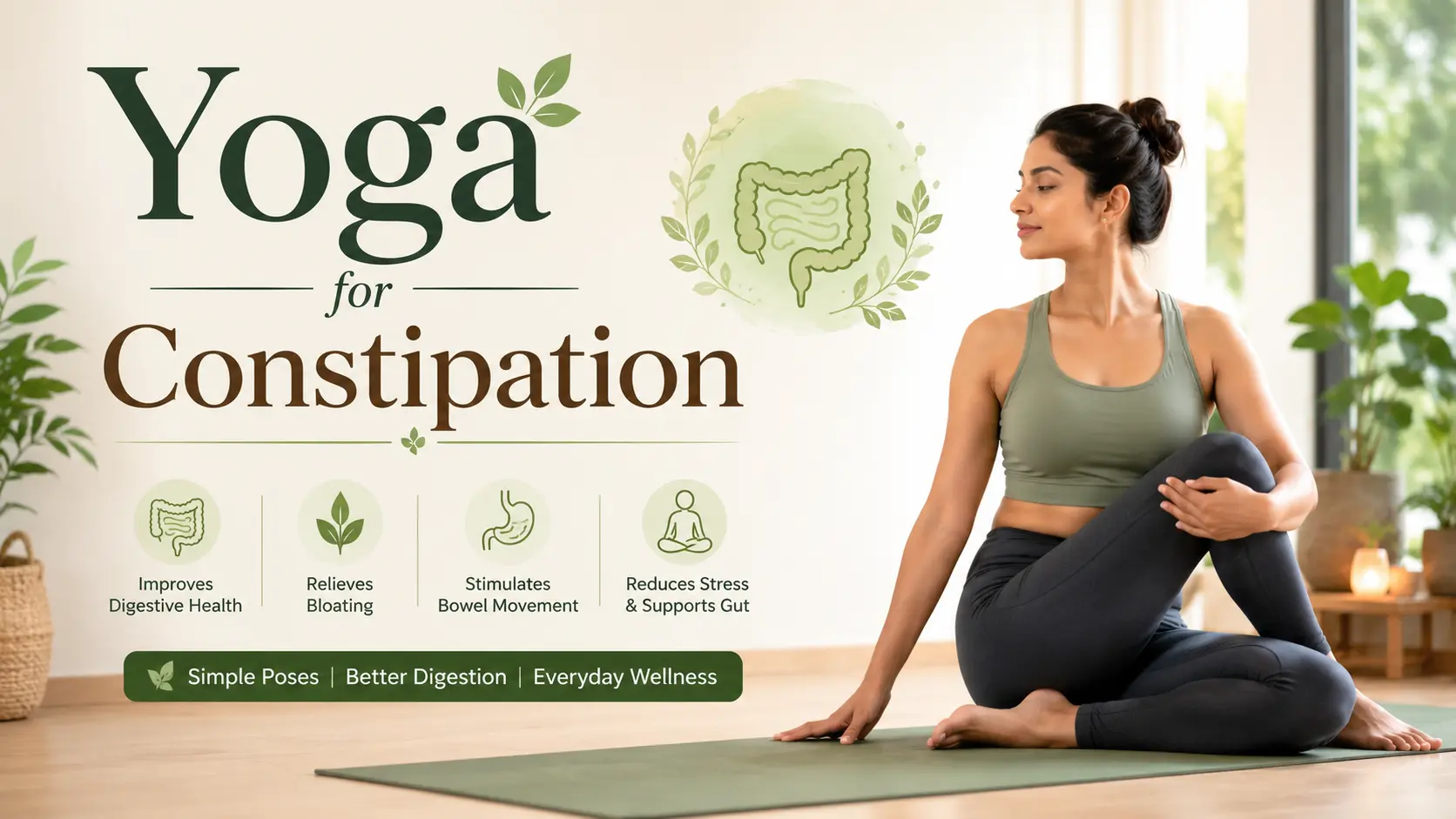
Constipation can make you feel bloated, uncomfortable, and low on energy. While diet and hydration are important, yoga is another natural way to support digestion. Certain yoga poses may help improve bowel movement, reduce bloating, and ease stress that can slow down digestion. Yoga works in a gentle and natural way by supporting both the body and mind. Instead of only focusing on symptoms, it helps improve how your digestive system functions
Can Yoga Help Relieve Constipation?
Yoga is not a cure for constipation, but many people find it helpful as part of a broader digestive wellness plan. Gentle twisting, stretching, and abdominal compression movements may encourage natural digestive activity while reducing physical tension throughout the body.
One reason yoga is often recommended for digestive support is its ability to address both physical and mental contributors to constipation. The digestive system and nervous system are closely connected, meaning stress and anxiety can directly influence bowel function.
The Gut-Brain Connection
The digestive system and the brain communicate continuously through a network often referred to as the gut-brain connection. When stress levels increase, the body may shift into a “fight-or-flight” state, which can slow digestion and affect bowel regularity.
Yoga encourages activation of the parasympathetic nervous system, commonly known as the “rest-and-digest” state. This relaxed condition allows the body to focus on essential functions such as digestion, nutrient absorption, and waste elimination.
By combining mindful breathing with physical movement, yoga helps calm the nervous system. This relaxation may contribute to improved digestive comfort and more regular bowel habits for some individuals.
How Twisting Poses Support Digestion
Twisting poses are commonly included in yoga routines designed for digestive wellness. These movements gently compress and release the abdominal region, which may help stimulate digestive organs and encourage movement within the intestines.
Although yoga should not be viewed as a direct treatment for digestive disorders, many practitioners report feeling less bloated and more comfortable after incorporating twists into their routines. The combination of movement and breath awareness may support healthy digestive function.
Twisting poses also improve spinal mobility and posture, creating additional benefits beyond digestive health.
Why Stress Can Make Constipation Worse
Stress affects nearly every system in the body, including digestion. When stress becomes chronic, it can alter digestive patterns, contribute to abdominal discomfort, and affect bowel regularity.
Many people notice digestive changes during busy work periods, travel, major life events, or times of emotional pressure. These experiences demonstrate how closely the nervous system and digestive system are connected.
Yoga provides an opportunity to slow down and focus on the present moment. Through controlled breathing and mindful movement, practitioners often experience reduced tension, which may indirectly support healthier digestion.
Benefits of Yoga for Constipation
Yoga offers several potential benefits for individuals seeking natural digestive support. Unlike temporary solutions that focus only on symptoms, yoga encourages habits that contribute to overall wellness.
Regular practice may help improve circulation, support abdominal mobility, reduce stress, encourage physical activity, and promote relaxation. These combined effects create a more supportive environment for healthy digestion and bowel function.
Another advantage is accessibility. Many yoga poses suitable for constipation relief can be performed at home without special equipment, making them easy to incorporate into a daily routine.
Join yoga teacher training in Rishikesh at Rudra Yoga India for an authentic and immersive yogic experience.
Best Yoga Poses for Constipation Relief
Certain yoga poses are particularly popular among practitioners looking to support digestive wellness. These movements focus on gentle stretching, twisting, and abdominal engagement while encouraging mindful breathing.
The following poses are beginner-friendly and can be adapted to different fitness levels. Moving slowly and comfortably is more important than forcing deep stretches.
Wind-Relieving Pose (Pawanmuktasana)
Wind-Relieving Pose is often considered one of the most effective yoga poses for digestive comfort. As the name suggests, it is commonly used to help relieve bloating, gas, and abdominal pressure.
To perform this pose, lie on your back and gently bring one knee toward your chest. Hold for several breaths before switching sides. You can also hug both knees into the chest simultaneously while breathing deeply.
This gentle abdominal compression may encourage movement within the digestive tract while providing a soothing stretch for the lower back and hips.
Supine Spinal Twist
The Supine Spinal Twist combines relaxation with gentle rotation of the spine. This pose is frequently included in yoga sequences designed to support digestion and reduce tension throughout the body.
Begin by lying on your back and drawing your knees toward your chest. Slowly lower both knees to one side while keeping your shoulders grounded. Turn your gaze in the opposite direction if comfortable.
Deep breathing during this pose encourages relaxation while creating a mild massage-like effect for the abdominal region.
Seated Half Spinal Twist
The Seated Half Spinal Twist provides a deeper rotational movement that may help stimulate digestive activity. It also supports flexibility in the spine and improves posture.
Sit comfortably with one leg extended and the opposite foot placed outside the extended leg. Rotate your torso toward the bent knee while maintaining a tall spine. Focus on slow breathing rather than forcing the twist.
Practicing this pose regularly may help create awareness in the abdominal region while promoting overall mobility and comfort.
Cobra Pose
Cobra Pose gently stretches the front of the body, including the abdominal area. This posture is often used to improve spinal flexibility while promoting circulation throughout the torso.
Lie face down with your palms beneath your shoulders. Press gently into your hands as you lift your chest while keeping your elbows slightly bent and shoulders relaxed.
The gentle extension created by Cobra Pose can help counteract long periods of sitting while encouraging healthy movement throughout the digestive region.
Child’s Pose
Child’s Pose is one of the most restorative yoga postures. It provides an opportunity to slow down, breathe deeply, and release physical tension that may contribute to digestive discomfort.
Start on your hands and knees before lowering your hips toward your heels. Extend your arms forward or rest them alongside your body. Allow your forehead to rest comfortably on the floor.
This position promotes relaxation and encourages diaphragmatic breathing, both of which may support digestive wellness and stress reduction.
Cat-Cow Stretch
Cat-Cow Stretch is a gentle flowing sequence that improves spinal mobility and encourages movement throughout the abdomen. It is often used as a warm-up exercise before more advanced yoga poses.
Begin on your hands and knees. As you inhale, lift your chest and tailbone while gently arching your back. As you exhale, round your spine and draw your abdomen inward.
Repeating this movement slowly with your breath creates a rhythmic massage-like effect that many practitioners find soothing and energizing.
Crescent Lunge Twist
The Crescent Lunge Twist combines balance, stretching, and rotational movement. This pose engages the core while providing a gentle twist that may help support digestive activity.
Step one foot forward into a lunge position and keep the back leg extended. Bring your hands together at your chest and rotate your torso toward the front leg.
Move slowly and maintain steady breathing throughout the pose. This position also strengthens the legs and improves overall stability.
Legs Up The Wall Pose
Legs Up The Wall Pose is a calming posture often used at the end of a yoga session. Although it does not directly compress the abdomen, it promotes relaxation and supports recovery after physical activity.
Sit beside a wall and gently swing your legs upward while lowering your back to the floor. Allow your arms to rest comfortably at your sides and focus on slow breathing.
Many people find this pose particularly helpful for reducing stress and creating a sense of calm, both of which can positively influence digestion.
A 15-Minute Yoga Routine for Constipation
A consistent short routine is often more effective than occasional long sessions when it comes to supporting digestion. This 15-minute sequence is designed to gently activate the abdominal area, improve circulation, and promote relaxation. It can be practiced in the morning or evening on an empty stomach for best results.
Start with Cat-Cow Stretch for two minutes to warm up the spine and encourage gentle abdominal movement. Follow with Wind-Relieving Pose for two to three minutes on each side. Move into Supine Spinal Twist, holding each side for one to two minutes. Finish with Child’s Pose and Legs Up The Wall Pose for deep relaxation and nervous system balance.
Breathing Techniques That Support Healthy Digestion
Breathing plays a powerful role in digestive health. Slow, deep breathing helps activate the parasympathetic nervous system, which supports the body’s natural “rest and digest” state. When breathing becomes shallow due to stress, digestion may slow down, contributing to discomfort and irregular bowel movements.
Diaphragmatic Breathing
Diaphragmatic breathing focuses on expanding the abdomen rather than the chest. Sit or lie comfortably and place one hand on your belly. Inhale deeply through the nose, allowing the stomach to rise, then exhale slowly. Practicing this for five to ten minutes daily may help reduce stress and support smoother digestion.
Alternate Nostril Breathing
Alternate Nostril Breathing is a calming technique that balances the nervous system. Using the thumb and ring finger, gently alternate closing each nostril while breathing slowly and evenly. This practice can help reduce anxiety, improve focus, and indirectly support digestive balance by calming the mind-body connection.
Lifestyle Habits That Work Alongside Yoga
Yoga works best when combined with supportive lifestyle habits. Drinking enough water throughout the day is essential for softening stool and supporting regular bowel movements. A diet rich in fiber from fruits, vegetables, legumes, and whole grains also plays a key role in maintaining digestive health.
Regular physical activity, such as walking, helps stimulate intestinal movement. Establishing a consistent bathroom routine can also train the body for regular elimination. Eating slowly and chewing food properly improves digestion and reduces strain on the gastrointestinal system.
Common Mistakes People Make When Using Yoga for Constipation
One common mistake is expecting immediate results after a single session. Yoga supports gradual improvement, and consistency is more important than intensity. Another mistake is practicing on a full stomach, which can cause discomfort and reduce effectiveness.
Some individuals also perform poses too forcefully, especially twists, which can strain the back instead of supporting digestion. It is important to move gently and respect the body’s limits. Ignoring hydration and diet while relying only on yoga is another limitation that can slow progress.
Frequently Asked Questions
How quickly can yoga help constipation?
Results vary depending on the individual. Some people feel relief within a few sessions, while others notice gradual improvement over one to two weeks of consistent practice. Long-term benefits are more likely when yoga is combined with proper hydration, diet, and physical activity.
Which yoga pose is best for constipation?
Wind-Relieving Pose is often considered one of the most effective poses for immediate digestive comfort. It gently compresses the abdomen, which may help stimulate bowel movement and reduce bloating when practiced regularly.
Can yoga help chronic constipation?
Yoga may support chronic constipation as part of a broader lifestyle approach. However, persistent symptoms should always be evaluated by a healthcare professional to rule out underlying medical conditions. Yoga works best as a supportive practice rather than a standalone treatment.
Should I practice yoga before or after meals?
Yoga is best practiced on an empty stomach or at least two to three hours after eating. Practicing too soon after meals may cause discomfort, especially in poses that involve twisting or abdominal compression.