There are many places around the world where you can practice yoga. But studying yoga in Rishikesh offers an experience that goes far beyond attending a class, learning postures, or improving flexibility.
Known as one of the world’s most important destinations for yoga and spiritual learning, Rishikesh brings together traditional yogic teachings, experienced teachers, meditation, nature, and a lifestyle centered around inner awareness. For many students, spending time here becomes a turning point in their yoga journey.
Whether you are a beginner, an experienced practitioner, or someone considering becoming a yoga teacher, studying in Rishikesh can change the way you understand and practice yoga.
Yoga Becomes More Than Physical Exercise
Modern yoga is often associated with stretching, fitness, and challenging postures. While asana is an important part of yoga, traditional yoga is much broader.
When you study 500 hour Yoga Teacher Training in Rishikesh, you are introduced to practices and concepts that encourage you to look beyond the physical body. Depending on your course and school, your studies may include:
- Asana and alignment
- Pranayama
- Meditation
- Yoga philosophy
- Mantra and chanting
- Anatomy and physiology
- Yogic lifestyle
- Relaxation techniques
- Traditional cleansing practices
- Teaching methodology
This broader approach can completely change your understanding of what yoga actually means.
Instead of simply asking, “How can I perform this posture better?”, you may begin asking, “How can yoga improve the way I live, think, breathe, and respond to life?”
The Environment of Rishikesh Supports Deeper Practice
Your surroundings can have a powerful influence on your practice.
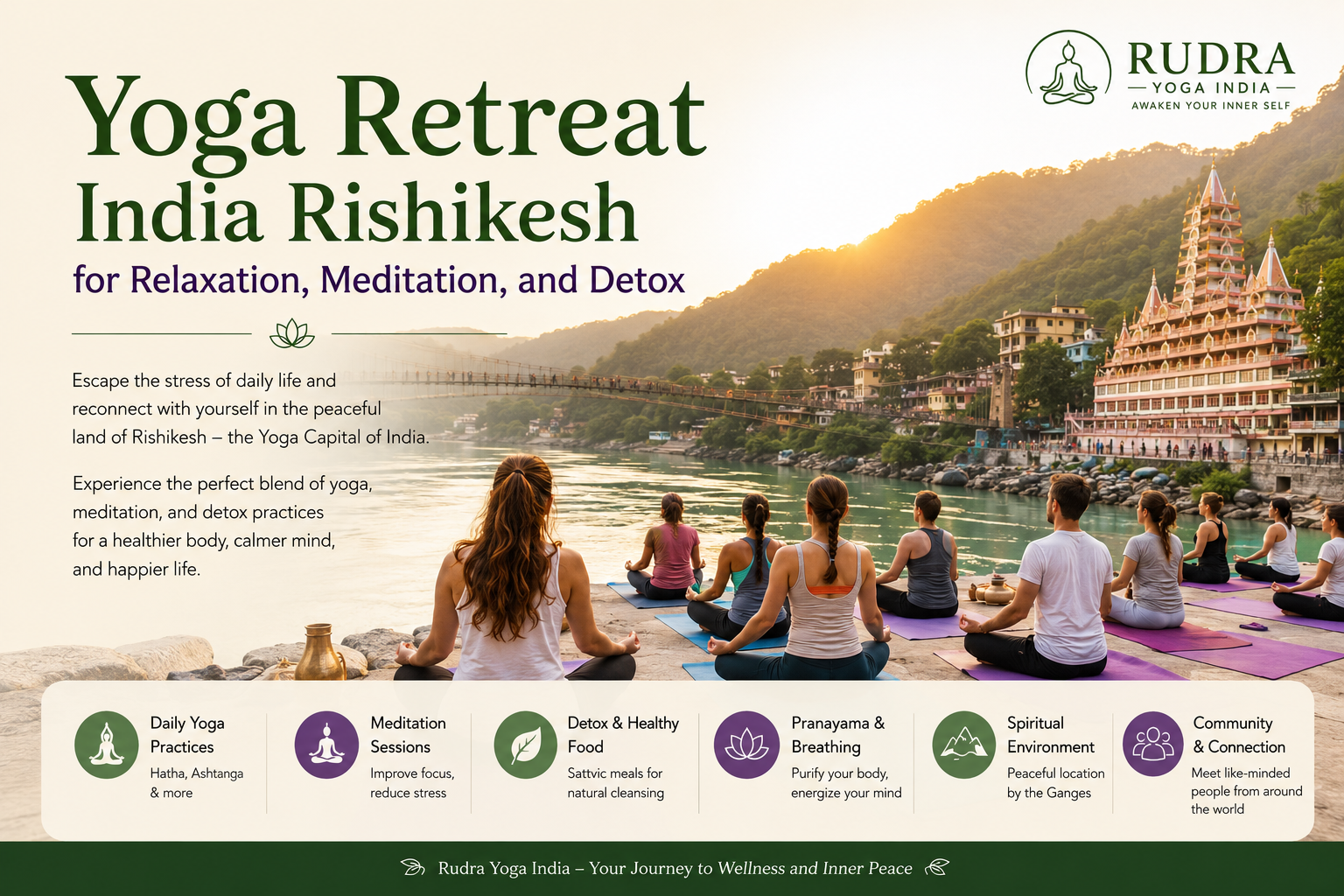
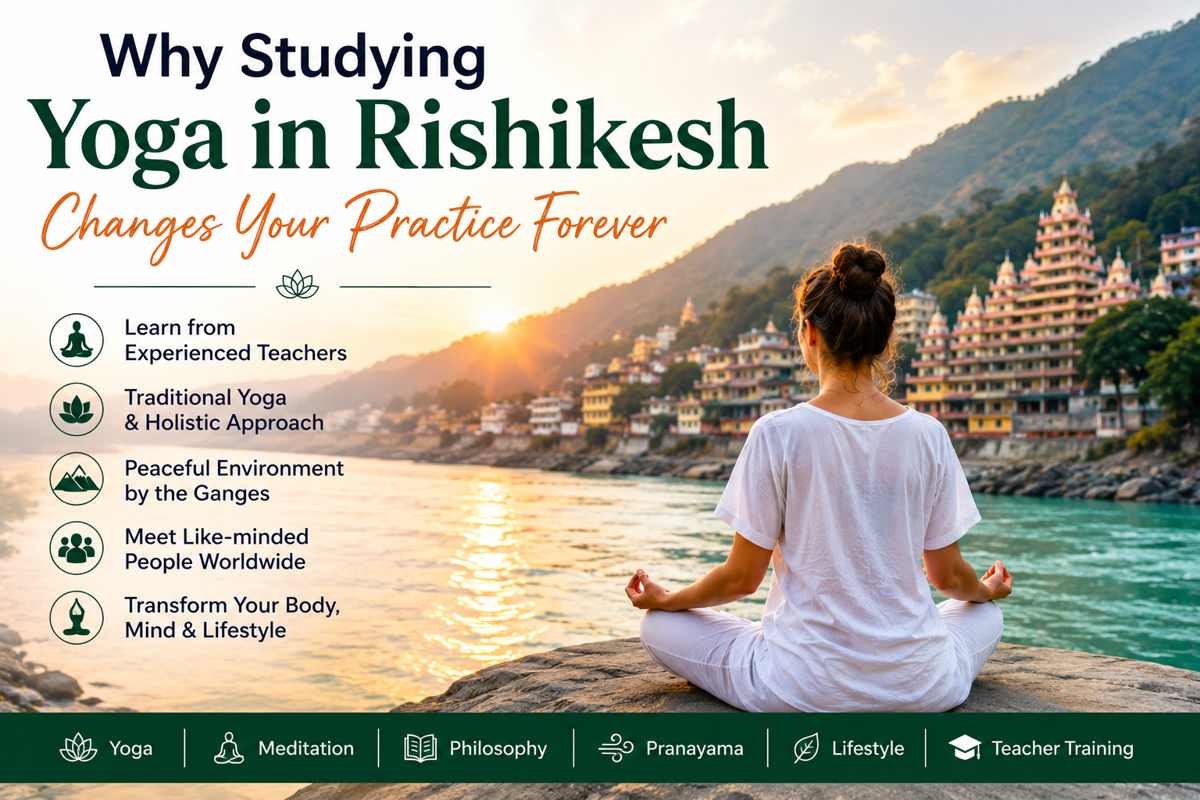
Rishikesh is situated beside the Ganges and surrounded by the foothills of the Himalayas. The combination of river views, greenery, temples, ashrams, and a strong yoga culture creates an environment where it can feel easier to slow down and focus.
Instead of rushing from work to a yoga studio and then returning to your usual routine, students in Rishikesh often spend several hours each day learning, practicing, studying, eating mindfully, resting, and reflecting.
This change in daily rhythm can make yoga feel less like an activity and more like a way of life.
You Learn to Practice With Awareness
One of the biggest changes students experience is a greater awareness of the body and breath.
A regular yoga class may focus mainly on completing a sequence. A traditional yoga course can encourage you to understand why you are practicing a particular posture or breathing technique.
You begin noticing:
- How your breathing changes during difficult postures
- Where you hold unnecessary tension
- How your thoughts affect your practice
- When you are pushing too hard
- How your posture changes throughout the day
- How breath and movement can work together
Over time, this awareness can continue outside the yoga hall.
You may become more conscious while walking, eating, working, exercising, or dealing with stressful situations.
Yoga Philosophy Starts Making Practical Sense
Yoga philosophy can initially seem abstract when you read about it in a book.
Concepts such as mindfulness, non-attachment, self-discipline, compassion, and awareness become easier to understand when they are discussed alongside daily practice.
Studying yoga in Rishikesh gives students an opportunity to connect philosophical ideas with real experiences.
For example, learning about non-attachment is one thing. Observing your own frustration when you cannot perform a particular asana—and learning how to respond differently—is another.
This is where yoga philosophy can become practical rather than theoretical.
You Develop a More Consistent Routine
Immersing yourself in a dedicated yoga environment can help establish discipline.
Many yoga programs follow a structured daily schedule that may include early morning practice, classes, meditation, meals, rest, and evening sessions.
Initially, waking up early and following a disciplined routine may feel challenging. Eventually, however, many students discover that consistency becomes easier when the entire environment supports it.
This can have an important effect after you return home.
Instead of practicing yoga only when you have free time, you may start protecting a regular time for your practice.
Learning From Experienced Yoga Teachers
Another important advantage is direct interaction with teachers who have spent years studying and practicing yoga.
A good teacher does more than demonstrate postures. They can help you understand alignment, breathing, modifications, sequencing, meditation, philosophy, and the relationship between different aspects of yoga.
In a teacher-training environment, students also learn how to observe others and communicate instructions clearly.
This can transform your personal practice because you start seeing postures from both the student’s and teacher’s perspective.
A Yoga Course in Rishikesh Can Build Confidence
You do not need to be extremely flexible or advanced to begin studying yoga.
A structured yoga course can help you understand your current abilities and gradually develop strength, mobility, balance, concentration, and confidence.
Progress becomes easier to recognize when you practice consistently.
Perhaps you hold a posture that previously felt impossible. Maybe your breathing becomes calmer. Perhaps you finally understand an alignment principle that confused you for months.
These small improvements can change your relationship with yoga.
You stop comparing yourself with other practitioners and start paying attention to your own progress.
Meeting People From Around the World
Rishikesh attracts yoga students from many different countries.
A yoga course or Yoga TTC can therefore become a cultural experience as well as an educational one.
You may practice alongside people with completely different backgrounds, careers, cultures, and reasons for studying yoga.
Some are looking for personal growth. Others want to become teachers. Some are experienced practitioners, while others are beginning their journey.
Sharing the same practice can create meaningful connections and friendships that continue long after the course ends.
Nature Gives You Space to Slow Down
Modern life often keeps people surrounded by screens, traffic, notifications, deadlines, and constant information.
Rishikesh offers opportunities to step away from that environment.
Time near the Ganges, walks through the surrounding areas, quiet meditation sessions, and time spent away from everyday responsibilities can create space for reflection.
You may discover that your practice becomes deeper when there is less external noise.
This doesn’t mean you need to leave modern life permanently. Instead, the experience can teach you how valuable moments of stillness can be.
You Start Taking the Breath More Seriously
Pranayama is an important component of traditional yoga.
For many beginners, breathing is something that happens automatically. Through guided practice, students can begin paying closer attention to the relationship between breathing, movement, concentration, and relaxation.
This can make familiar yoga postures feel completely different.
You may discover that a posture isn’t only about where your body is positioned. The quality of your breath and the awareness you bring to the movement can be equally important.
Studying Yoga Can Change Your Definition of Progress
Before studying yoga, progress may mean becoming more flexible or mastering difficult poses.
After spending time in a dedicated yoga environment, your definition of progress may change.
Progress could mean:
- Breathing more calmly
- Becoming more patient
- Practicing consistently
- Developing better body awareness
- Sitting comfortably in meditation
- Understanding yoga philosophy
- Becoming less reactive to stressful situations
- Learning to respect your body’s limitations
The physical improvements still matter, but they become part of a much larger picture.
Why a Yoga Teacher Training in Rishikesh Can Be Transformative
For students who want to take their practice further, a Yoga Teacher Training in Rishikesh can provide a more immersive experience.
Teacher-training programs typically combine personal practice with theoretical and practical education. Students learn not only how to practice yoga but also how to structure classes, demonstrate postures, give instructions, understand basic anatomy, and work with different students.
A 500 hour Yoga Teacher Training in Rishikesh is a popular starting point for people who want a comprehensive foundation.
For more experienced practitioners, longer programs can provide additional opportunities to explore teaching, philosophy, meditation, and advanced practices.
The most important consideration is choosing a course that matches your experience, goals, schedule, and preferred style of yoga.
The Experience Doesn’t End When You Leave Rishikesh
Perhaps the biggest reason studying yoga in Rishikesh can change your practice forever is that the lessons can continue after you return home.
You take your experiences with you.
The breathing techniques you learned can become part of your morning routine. Meditation can become a regular habit. Yoga philosophy can influence how you respond to difficult situations. The discipline developed during your course can help you maintain a consistent practice.
Rishikesh may provide the environment, but the real transformation happens when you continue applying what you learned in everyday life.
Choosing the Right Yoga School in Rishikesh
Not every yoga school will offer the same experience, so choosing carefully is important.
Before enrolling, consider:
1. Course Curriculum
Check whether the program includes the subjects you actually want to study, rather than focusing only on the number of hours.
2. Teachers
Research the teachers’ experience, teaching style, and areas of expertise.
3. Class Size
Smaller groups can sometimes provide more opportunities for individual feedback.
4. Accommodation and Food
If you are attending an intensive program, comfortable accommodation and suitable meals can make a significant difference.
5. Certification
If your goal is to teach professionally, understand what certification the school provides and whether it meets the requirements relevant to your intended teaching pathway.
6. Student Reviews
Look for genuine feedback from previous students and pay attention to comments about teaching quality, organization, accommodation, and overall experience.
Rishikesh Is Not Just a Destination—It Can Become Part of Your Practice
Studying yoga in Rishikesh is not necessarily about finding a magical solution or becoming a completely different person in a few weeks.
The deeper benefit comes from immersion.
You practice regularly. You study. You meditate. You listen to teachers. You meet other practitioners. You spend time in nature. You experience a simpler routine.
All these experiences can gradually change how you approach yoga.
You may arrive thinking that yoga is mainly about flexibility and physical strength. You may leave understanding that yoga is also about awareness, discipline, breath, concentration, and how you live your everyday life.
That is why studying yoga in Rishikesh can become a defining chapter in a practitioner’s journey.
Begin Your Yoga Journey in Rishikesh
If you are looking for a place to deepen your practice, learn traditional yoga, or prepare for a teaching career, Rishikesh offers an environment where learning can extend far beyond the yoga mat.
The goal is not simply to collect another certificate or learn more postures.
The real opportunity is to develop a practice that stays with you long after you leave the banks of the Ganges.