Bringing a baby into the world is one of the most transformative experiences a woman’s body goes through. Pregnancy and childbirth—whether vaginal or cesarean—lead to significant physical changes, and recovery doesn’t happen overnight. Yoga can be a gentle, supportive practice to help your body heal, rebuild strength, calm the nervous system, and restore confidence after childbirth. However, not all yoga is suitable right away. Knowing when to start, what benefits to expect, which poses help most, and how to practice safely can make your postpartum yoga journey both effective and nurturing.
Why Yoga After Childbirth Matters
Yoga after childbirth isn’t just exercise—it’s a holistic recovery tool that supports physical, emotional, and mental well-being.
1. Restores Core & Pelvic Floor Function
During pregnancy, abdominal muscles stretch and the pelvic floor supports increased weight, which often leads to weakness or separation (diastasis recti). Gentle yoga movements from Rudra Yoga India like pelvic tilts and supported bridges can help re-engage the core and pelvic floor muscles without strain.
2. Reduces Stress and Supports Emotional Balance
Becoming a new mother brings joy but also fatigue, stress, and hormonal ups and downs. Focused breathing (pranayama), mindful movement, and calming restorative postures promote relaxation, nervous system balance, and improved sleep quality—which are crucial in early postpartum.
3. Alleviates Common Postpartum Aches
Many new moms experience back pain from breastfeeding, carrying the baby, and postural changes. Gentle yoga poses can stretch and strengthen the back, neck, and hips, relieving tension and discomfort.
4. Boosts Circulation and Reduces Swelling
Liability of circulation and swelling in legs or pelvis can happen after childbirth. Restorative poses like Legs Up the Wall help improve blood flow and reduce swelling.
5. Encourages Mind-Body Connection
Yoga helps reconnect your mind and body after the physical separation of pregnancy and childbirth. This mindful reconnection fosters confidence, supports emotional healing, and makes you feel grounded in your changing body.
When to Start Postpartum Yoga
There’s no universal timeline, as recovery varies from one woman to another. However:
- After vaginal birth: gentle yoga often can begin around 4–6 weeks postpartum, depending on your comfort level and healthcare provider clearance.
- After cesarean delivery: your body needs additional recovery time. Many experts suggest waiting 8–12 weeks or longer before starting yoga and always getting medical approval first.
- Always ask your healthcare provider before you start, especially if you had complications, diastasis recti, pelvic pain, or a cesarean.
Yoga after childbirth should feel nourishing and gentle—not rushed or intensive.
Principles of Safe Postpartum Yoga
Before diving into specific poses, here are general safety tips to keep in mind:
✨ 1. Listen to Your Body
Postpartum recovery is highly individual. If something feels painful, sharp, or heavy—especially around your abdomen or pelvis—stop and modify. Healing takes time.
✨ 2. Start with Breath Work
Begin with slow breath awareness (diaphragmatic or belly breathing) to calm your nervous system and reconnect with your core muscles. Gentle breathing also supports relaxation and reduces stress.
✨ 3. Focus on Gentle Movements First
Avoid intense core exercises or advanced poses early on. Certified postpartum yoga often emphasizes slow, gentle mobility and stabilization before strength or flexibility work.
✨ 4. Use Props
Blankets, blocks, bolsters, and cushions can make postures safer and more comfortable—especially around sensitive areas or healing sites.
✨ 5. Hydrate and Take Breaks
Staying hydrated and resting when needed supports recovery and prevents strain.
Postpartum Yoga: Gentle Poses for Recovery
Below are gentle yoga poses commonly recommended to support postpartum healing. Move slowly and mindfully through each posture.
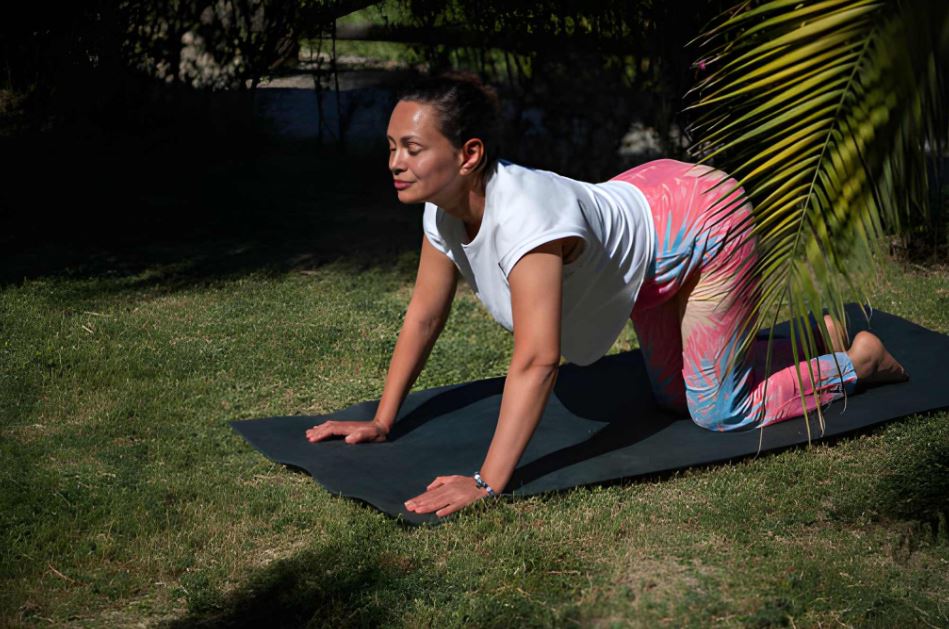
1. Cat-Cow (Marjaryasana — Bitilasana)
Benefits: Encourages spine mobility, loosens back muscles, and helps reconnect breath with movement—ideal after childbirth.
How to do:
- Start on hands and knees, wrists under shoulders and knees under hips.
- Inhale, lift your chest and tailbone (Cow Pose).
- Exhale, round your spine and tuck your chin (Cat Pose).
- Flow gently for 10 breaths.
2. Pelvic Tilts
Benefits: Lightly engages the lower abdomen and pelvic floor—perfect early in recovery.
How to do:
- Lie on your back with knees bent, feet flat.
- Inhale, then gently exhale as you tuck your pelvis, pressing the lower back into the floor.
- Release on the inhale.
- Repeat 8–12 times.
3. Child’s Pose (Balasana)
Benefits: A deeply restorative resting pose that stretches lower back, hips, and encourages calm breathing.
How to do:
- Kneel and sit back on your heels.
- Fold forward and rest your forehead on the mat or a cushion.
- Stay for 1–2 minutes with slow breath.
4. Bridge Pose (Setu Bandha Sarvangasana)
Benefits: Gently strengthens the glutes, lower back, and pelvic floor, and opens the chest.
How to do:
- Lie on your back with knees bent, feet hip-width apart.
- Inhale and lift your hips slightly, engaging your glutes and pelvic floor.
- Hold for several breaths, then slowly lower.
5. Legs Up the Wall (Viparita Karani)
Benefits: Enhances circulation, reduces leg swelling, and supports relaxation.
How to do:
- Sit with your hips near a wall, then lie back and extend legs up the wall.
- Relax your arms by your sides.
- Hold for 2–5 minutes.
6. Mountain Pose (Tadasana)
Benefits: Improves posture and alignment, vital after hours spent nursing or holding a baby.
How to do:
- Stand with feet hip-width apart.
- Press evenly into the ground, lengthen your spine, relax shoulders.
- Breathe deeply for 10 breaths.
7. Seated Spinal Twist (Gentle Ardha Matsyendrasana)
Benefits: Helps release back and shoulder tension—but only when you’re comfortable and healed enough to twist gently.
How to do:
- Sit cross-legged, inhale to lengthen spine, exhale to twist gently to one side.
- Keep movements slow and stop if any abdominal pressure is felt.
Poses and Practices to Avoid Early On
Even though new moms may feel eager to do a full yoga practice, certain poses should be postponed until your body is stronger and your healthcare provider clears you. These include:
❌ Deep Backbends
Poses like camel or full wheel can strain abdominal and pelvic muscles still healing.
❌ Intense Core Work
Exercises such as boat pose or deep core lifts may stress weak abdominal muscles and delay healing.
❌ Inversions
Headstands or handstands can put unwanted pressure on the pelvic floor and raise blood pressure.
❌ Deep Forward Bends
Poses that heavily compress the abdomen should be avoided in early recovery.
Extra Tips for Postpartum Yoga Success
🧘♀️ Make It Gentle, Not Intense
The goal is recovery—not fitness performance. Respect your energy levels and physical cues.
🧘♀️ Include Breath & Meditation
Even a few minutes of mindful breathing or meditation can reduce stress, improve sleep, and enhance your sense of well-being.
🧘♀️ Be Consistent—but Flexible
Short daily sessions (5–15 minutes) can be more effective than intense, infrequent ones.
🧘♀️ Connect With Other Moms
Joining postpartum yoga groups (online or in person) can provide encouragement and community.
When to Seek Professional Guidance
Talk to your doctor, physical therapist, or certified postpartum yoga instructor if you experience:
- Pelvic pain or heaviness
- Urinary leakage or bowel issues
- Worsening diastasis recti
- Pain around a C-section scar
- New or sharp pains during yoga
Professional guidance ensures your practice is tailored to your specific body and recovery progress.
Conclusion
Yoga after childbirth offers more than physical movement—it’s an invitation to nurture your body, mind, and spirit after the profound experience of bringing new life into the world. By starting gently, listening to your body, avoiding risky poses too soon, and practicing consistently with mindful breath, yoga can support your postpartum recovery in powerful ways.
Remember: your body is healing, and yoga is a tool to support that journey—celebrate every small step forward.