The practice of yoga has long transcended its ancient Indian origins, evolving into a global wellness phenomenon that, by 2026, represents a significant economic force and a deeply embedded lifestyle choice for millions. Driven by a universal pursuit of improved mental and physical well-being, the industry is experiencing robust growth, with a dedicated and expanding community of practitioners worldwide. The data for 2026 paints a picture of a dynamic market characterized by increasing participation, technological integration, and a focus on holistic health.
The Yoga Economy: Market Growth and Valuation
The global yoga market is a formidable segment of the broader wellness economy. Its valuation is substantial and its growth trajectory is impressive, indicating continued investment and consumer interest.
- The global yoga market was valued at approximately $125.82 billion in 2025 and is projected to reach around $297.86 billion by 2035.
- It is expanding at a significant compound annual growth rate (CAGR) of approximately 9.00% between 2026 and 2035.
- The Asia-Pacific region is anticipated to be the fastest-growing market, although North America currently holds the largest market share (33.36% in 2024).
Key Market Statistics (2024-2035)
| Metric | Details | |
|---|---|---|
| Global Market Value (2025) | ~$125.82 Billion | |
| Projected Market Value (2035) | ~$297.86 Billion | |
| Compound Annual Growth Rate (CAGR) | ~9.00% (2026-2035) | |
| North American Market Share (2024) | 33.36% | |
| Fastest Growing Region | Asia Pacific | |
| Yoga Apparel Market Value (2024) | $29.8 Billion | |
| Yoga Mat Market Value | $8.9 Billion worldwide | |
| Pilates & Yoga Studios Market (2026) | $194.9 Billion | |
| Yoga Tourism Market Value (2024) | ~$182.5 Billion | |
| Online Market CAGR | ~12.3% by 2027 |
Demographics of the Global Yogi Community
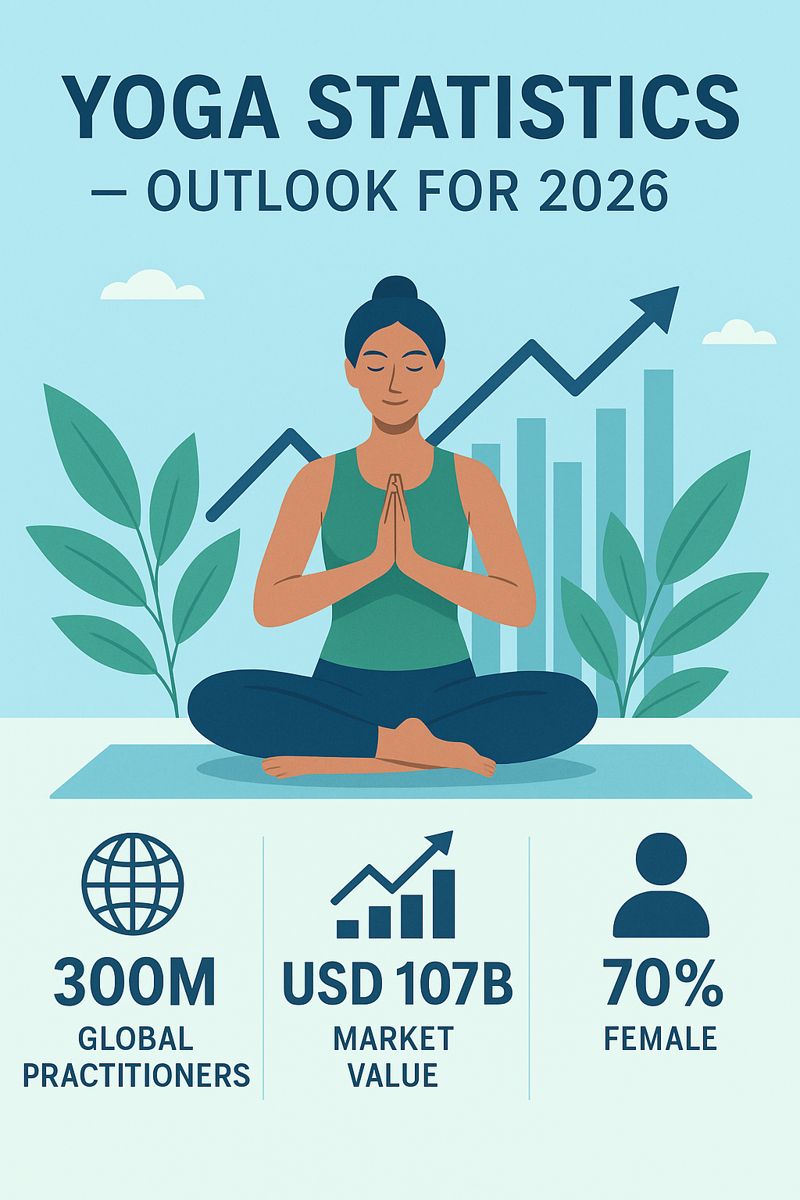
The total number of yoga practitioners worldwide is estimated to be around 300 million people. The community is diverse, though certain demographic patterns persist across the globe.
Global Participation by Country
| Country | Approximate Number of Yoga Practitioners | Percentage of Population (where available) | |
|---|---|---|---|
| India | 150 Million | ~11.38% regular practitioners | |
| United States | 35 Million | ~16.9% of adults (2022 data) | |
| Canada | 7.6 Million | 7.6 Million total | |
| United Kingdom | 0.50 Million | 0.50 Million total | |
| Australia | 1.5 Million | 12% of the population |
Age and Gender Breakdown
While the practice is accessible to all ages, certain age groups show higher engagement, largely motivated by lifestyle factors.
| Demographic Factor | Statistic |
|---|---|
| Global Female Practitioners | 72% |
| Global Male Practitioners | 28% |
| Primary Age Group (30-49 years) | 43% of practitioners |
| Age 18-29 years | 19% of practitioners |
| Age 60+ years | 21% of practitioners (globally) |
| Indian Male Practitioners | Slightly higher regular practice than women |
In the US specifically, the community is predominantly white (71%) and female (74%) as of 2022, though there are growing movements towards greater inclusivity and accessibility across diverse communities.
Motivations for Practice: Mind, Body, and Spirit
The motivations driving individuals to the mat are varied, but a core theme is the desire for holistic well-being. A significant majority of practitioners plan to increase their yoga time in the coming year, a testament to the perceived benefits.
Primary Motivations for Practicing Yoga
| Motivation | Percentage of Practitioners |
|---|---|
| Improve flexibility and strength | 61% |
| Reduce stress and anxiety | 56% |
| Improve general fitness/overall health | 49% |
| Enhance sleep quality | 59% |
| Boost happiness | 43% |
| Decrease symptoms of depression | >30% |
| Self-care and deep introspection | 27% |
| Alleviate a health condition | 28% |
A substantial portion (81%) report general wellness as a key reason, and 98% believe yoga will improve their health. The mental health benefits, in particular, are a significant driver, with 54% of daily practitioners focusing on stress reduction.
Key Trends Shaping the Yoga Landscape in 2026
The yoga industry in 2026 is evolving, adapting to modern consumer demands and technological advancements.
The Digital Revolution in Yoga
The shift to online platforms, accelerated by the pandemic, has been a defining trend. Digital access has opened doors for many who previously faced barriers like time constraints or proximity to studios.
- The online yoga class sector is expected to grow at a CAGR of 12.3% by 2027.
- During the pandemic, online hot yoga participation increased by 250%.
- Despite the rise of digital options, a notable 45% of participants still express a preference for in-studio classes, highlighting the enduring value of community and in-person instruction.
The Rise of Corporate Wellness and Yoga Therapy
Businesses are increasingly recognizing the value of employee well-being, incorporating yoga into their wellness offerings.
- 44% of companies offer yoga as part of their corporate wellness programs. Projections suggest more than 70% of Fortune 500 companies will incorporate yoga and mindfulness in the near future.
- There is a projected 30% rise in demand for yoga therapists in various healthcare and rehabilitation settings, signaling a growing acceptance of yoga as a complementary therapy.
Sustainable Products and Yoga Tourism
Conscious consumerism is impacting the yoga accessories market, with a strong demand for eco-friendly and sustainable products, such as mats made from recycled materials.
Yoga tourism continues its robust growth, with the market expected to reach over $250 billion by 2030. Retreats that combine yoga with adventure activities are particularly popular among younger generations, blending wellness with unique experiences.
The Future Outlook
The data clearly indicates that yoga is firmly established as a mainstream pillar of the global wellness movement. With strong market valuations, increasing participation across diverse demographics, and innovative trends in digital delivery and specialized services like corporate wellness and therapy, the yoga industry is poised for sustained and healthy growth well beyond 2026. The continued emphasis on the physical, mental, and emotional benefits of the practice ensures its relevance in an increasingly fast-paced and stressful world.